
Look, let’s sit down and talk person-to-person for a second.If you’ve spent any time on the internet lately looking for advice on how to stop feeling constantly overwhelmed, you’ve probably noticed that most “wellness” content reads like it was cranked out by a corporate machine. It’s full of clinical jargon, overly polished routines, and preachy lectures about how you need to revolutionize your life before sunrise.
Let’s strip all of that fake, sanitized fluff away.
I’m not going to pretend I wake up at 5:00 AM, sip hot lemon water on a pristine balcony, and meditate in silence while watching the sun rise. On most mornings, life is a chaotic, slightly stressful scramble to find matching socks, pour a cup of coffee before it gets cold, and answer three messages that came in while I was asleep.
If your day-to-day looks anything like that, traditional “self-care” advice isn’t just unhelpful—it feels like an insult to your intelligence. You don’t need a 12-step morning routine that takes two hours. You don’t need expensive bath salts or a $200 face cream.
What you actually need is baseline survival. You need practical, low-effort strategies to keep your head above water when work, family, finances, and your own internal monologue are all screaming for your attention at the exact same time.
Here is what taking care of yourself actually looks like when you’re a real human being living in the real world.
The Myth vs. The Reality: A No-BS Breakdown
To show you just how ridiculous most online advice is compared to what actually works, I built this simple reality-check table. Stop trying to live up to social media standards and focus on what you can actually pull off on a random Tuesday.
| What Fake “Wellness” Pros Tell You | What a Real Person Can Actually Pull Off | Why the Simple Way Keeps You Sane |
|---|---|---|
| “Run 5 miles or hit a 90-minute gym class every morning.” | Walk around the block for 15 minutes after you eat lunch. | It gets your blood moving without totally wiping out the tiny bit of energy you have left. |
| “Delete all your social media apps and do a digital detox.” | Put your phone in another room while you sit down to eat dinner. | Gives your brain a quiet 20-minute break without forcing you to live like a monk. |
| “Follow an elaborate, 10-step nighttime skincare ritual.” | Wash your face with warm water and turn off the TV 20 minutes earlier. | Helps you get to sleep faster, which fixes about 80% of your bad-mood days. |
| “Cut out negative energy and completely purge your social circle.” | Simply say, “I can’t help with that today, my schedule is totally packed.” | Keeps you from overcommitting out of social guilt when you’re already at a breaking point. |
| “Journal for 45 minutes in a fancy leather notebook every morning.” | Scribble your messy, chaotic thoughts on a sticky note and throw it in the trash. | Gets racing thoughts out of your head so your brain stops panicking about forgetting them. |
| “Turn your creative hobbies into a profitable side hustle!” | Read a trashy fantasy novel, doodle, or build a Lego set purely for fun. | Reminds your brain that not every single minute of your life needs to make money. |
| “Drink two gallons of infused water out of a massive jug daily.” | Keep a regular glass of cold water right next to your computer screen. | Stops you from getting those dull, mid-afternoon headaches caused by simple dehydration. |
| “Redesign your home workspace to maximize your creative flow.” | Clear off yesterday’s dirty coffee mugs and throw away old food wrappers. | Reduces visual clutter so your eyes don’t feel constantly overwhelmed while you work. |
Why Are We All So Friction-Burnt and Exhausted?
Before we talk about fixing things, let’s acknowledge why everything feels so heavy right now.
We live in a world that never, ever turns off. Your phone pings with work emails at 9:00 PM. News alerts push breaking crises directly into your pocket while you’re trying to pick out groceries. Algorithms are literally engineered by teams of hyper-smart scientists whose sole job is to keep your eyes glued to a screen for five more seconds.
On top of that, life is expensive, schedules are packed, and we are constantly bombarded with images of other people who seem to have their lives completely figured out.
Here’s a secret: nobody has it totally figured out.
Most people are just winging it, trying their best, and feeling exhausted behind closed doors. Recognizing that you aren’t broken—that you’re just a human being reacting normally to an absurdly fast-paced world—is the very first step toward giving yourself a break.
10 Grounded Habits That Actually Work

If you’re ready to reclaim a little bit of peace without making life more complicated, pick one or two of these habits. Don’t try to do all ten at once. That’s a guaranteed recipe for getting overwhelmed and quitting by Thursday.
1. Stop Sacrificing Your Sleep for Fake “Free Time”
We’ve all done this: it’s 10:30 PM, you’re dead on your feet, but you sit on the couch staring at your phone or watching mind-numbing TV until 1:00 AM. Why? Because the day was so packed with obligations for other people that late at night feels like the only time you actually own.
Psychologists call this revenge bedtime procrastination. It feels good in the moment, but tomorrow-you pays a heavy tax. When you’re running on five hours of trash sleep, every minor annoyance turns into a major disaster. Try putting your phone charging cable on the kitchen counter instead of your nightstand. Going to bed 30 minutes earlier will do more for your mental health than any self-help book ever could.
2. Take a Walk Without Headphones
Walking is the most underrated physical tool we have. You don’t need special workout gear, an expensive membership, or a tracking watch. Just put on your shoes and step outside.
Here’s the catch, though: leave your headphones in your pocket. We are so used to filling every empty second with podcasts, audiobooks, phone calls, or music that our brains never get a quiet moment to digest what’s happening in our lives. Taking a 10-minute walk in silence gives your mind room to unpack its clutter. It might feel a little awkward for the first two minutes, but your nervous system will thank you.
3. Step Into Actual Sunlight Every Morning

If you step out of bed, walk into a dimly lit kitchen, drive to an office, sit under fluorescent lights for eight hours, and then drive home in the dark, your body has no idea what time of day it is.
When you wake up, open a window, step onto your balcony, or walk down to the mailbox for two minutes. Getting natural light into your eyes early in the morning resets your circadian rhythm. It tells your brain, “Hey, the sun is up, let’s produce energy,” which automatically helps your body release melatonin later that night when it’s time to sleep.
4. Master the “Clean No”
Most people-pleasers think that when they say “no” to a request, they need to attach a long, dramatic story proving why they can’t do it. They draft three-paragraph text messages full of apologies and fake excuses.
Stop doing that. It’s exhausting, and it leaves the door open for people to negotiate with you. Practice using a “clean no”:
- “I can’t make that work right now, but thanks for checking with me!”
- “My schedule is totally jammed this week, so I’ll have to pass.”
- “I need a quiet evening at home tonight, so I won’t be able to drop by.”
Notice how none of those lines include a fake excuse? You are allowed to say no simply because you don’t have the energy. Your time belongs to you.
5. Stop Treating Food Like a Moral Test

Food is fuel, but it’s also meant to be enjoyed. Somewhere along the line, diet culture made us feel like eating a cookie makes us a “bad person” and eating a bowl of kale makes us a “good person.”
That mindset creates an endless cycle of guilt. Self-care with food isn’t about rigid, restrictive rules. It’s about paying attention to how your body feels an hour after you eat. If a specific lunch leaves you feeling bloated, foggy, and desperate for a nap at 2:00 PM, swap it out for something with more protein or fiber. And if you want a slice of birthday cake at a party, eat it, enjoy every single bite, and move on with your day without a single second of guilt.
6. Normalize Sitting Quietly Doing Absolutely Nothing
When was the last time you sat on your couch for five full minutes without looking at a screen, reading, listening to something, or talking to someone?
In our hyper-productive world, doing nothing feels uncomfortable—almost illegal. We get antsy and reach for our phones out of pure habit. But constantly feeding your brain content keeps your fight-or-flight response quietly humming in the background. Try sitting quietly on your porch or living room floor for three minutes. Unclench your jaw, drop your shoulders away from your ears, let your stomach relax out of its tight knot, and just exist.
7. Protect a Low-Stakes Hobby

A hobby is an activity you do purely for the joy of doing it, with zero expectation of getting good at it, making money from it, or posting the results online.
Draw a messy picture in a cheap sketchbook. Plant a potted herb on your windowsill. Work on a 1,000-piece puzzle that takes three weeks to finish. Read fiction books that have no educational value whatsoever. When you engage in an activity simply because it brings a smile to your face, you reclaim your identity from a world that constantly demands productivity.
8. Create Tiny Friction Points for Your Smartphone
You don’t need to throw your smartphone in the ocean to regain control over your life. You just need to make it slightly more annoying to open time-wasting apps.
Put your most addicting social apps inside a folder on your second home screen so you can’t click them on autopilot. Turn off all non-human notifications (meaning you only get alerts when an actual person calls or texts you, not when an app wants to sell you something). Put your screen on grayscale mode in the evenings. Making those apps slightly less colorful and convenient gives your conscious brain a chance to step in and say, “Do I actually want to scroll right now?”
9. Connect with People Who Don’t Feel Like Work

Isolation is a huge contributor to feeling burnt out, but going out to a loud, overwhelming social event when you’re already exhausted isn’t the fix.
Maintain your social battery by connecting with low-maintenance friends—the people with whom you don’t have to put on a “face.” Send a ridiculous meme to your best friend, call a family member while you’re standing in the kitchen folding laundry, or meet a neighbor for a quick 15-minute coffee on the sidewalk. Small, low-pressure human connections act as a powerful buffer against everyday stress.
10. Do a Daily “Brain Dump”
When your brain feels like a browser with 47 tabs open at the same time, trying to keep track of everything in your head is a recipe for anxiety.
Keep a cheap notebook on your desk or nightstand. Whenever you feel overwhelmed, sit down and write out every single thing bouncing around in your skull. Write down work tasks, personal errands, random worries, things you need to buy, and things that pissed you off today. Don’t worry about spelling, neatness, or organization. Just dump it out. Once those thoughts are physically sitting on a piece of paper, your brain stops panicking about forgetting them, allowing you to breathe a little easier.
The 5-Minute Emergency Reset for Terrible Days
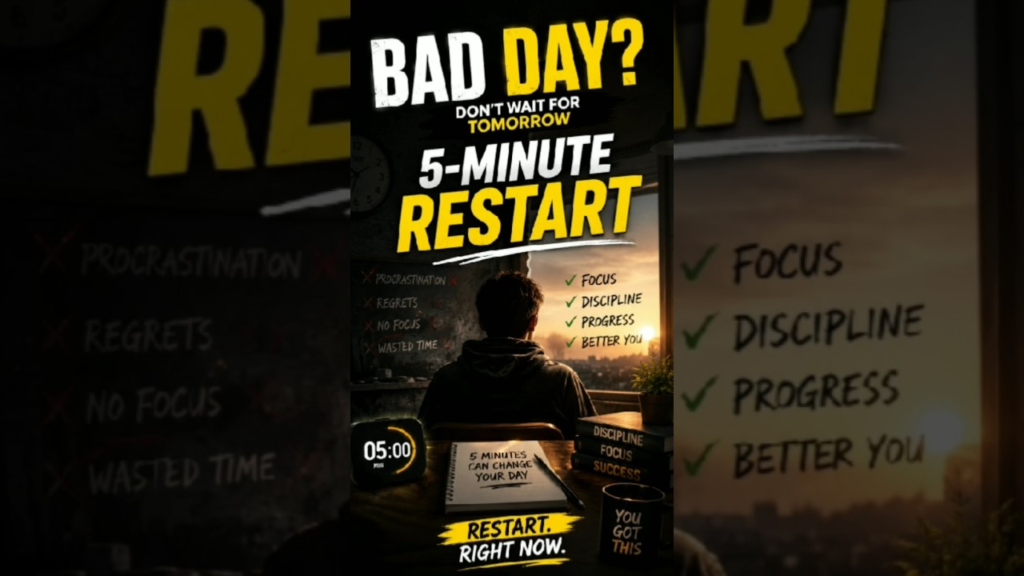
We all have days where everything goes completely wrong. The alarm didn’t go off, you spilled coffee down your shirt, a work project fell apart, and you feel like running into a closet and hiding.
When you’re stuck in the middle of a day like that, don’t try to fix your whole life. You can’t. Just execute this simple, 5-minute physical reset to bring your nervous system back down to earth:
+-----------------------------------------------------------------------+
|                    THE 5-MINUTE EMERGENCY RESET                       |
+-----------------------------------------------------------------------+
|                                                                       |
|  MINUTE 1: Drink a large glass of cold water.                         |
|            (Dehydration makes physical stress significantly worse.)   |
|                                                                       |
|  MINUTE 2: Stand up, stretch your arms high, and roll your shoulders. |
|            (Physically releases the knot holding tension in your neck)|
|                                                                       |
|  MINUTE 3: Step outside or look out an open window.                   |
|            (Gives your eyes a far-distance focal point to rest on.)   |
|                                                                       |
|  MINUTES 4-5: Breathe slowly.                                         |
|               (Inhale through nose for 4s, hold for 4s,               |
|                exhale through mouth for 6s. Repeat three times.)      |
|                                                                       |
+-----------------------------------------------------------------------+
This short routine won’t magically clear your inbox or pay your bills, but it stops your body from staying trapped in a physical panic response so you can tackle the very next logical step.
Frequently Asked Questions.
Q1: What if I literally don’t have 15 minutes of spare time in my day?
A: Then stop trying to add new activities to your schedule. Self-care for an overbooked schedule is about changing how you do the things you are already doing. Eat your lunch without staring at work emails. Listen to your favorite album in the car instead of stressful news radio. Or practice saying “no” to one extra task that shouldn’t have been handed to you in the first place.
Q2: What is the single most effective place to start if I feel completely burnt out?
A: Sleep. Hands down, no contest. Everything in life feels three times harder when you are physically exhausted. Forget about exercise plans, meal prep, or organization routines for a few days. Just focus on getting into bed 45 minutes earlier tonight.
Q3: Is taking time for myself selfish when my family or job needs me?
A: Absolutely not. Think of it like a car: if you never pull over to put gas in the tank or change the oil, the engine will eventually seize up on the highway. Taking basic care of your health and sanity isn’t selfish—it’s basic maintenance that allows you to keep showing up for the people who rely on you.
Q4: What should I do if these simple habits still aren’t making me feel better?
A: Grounded daily habits are fantastic for managing everyday stress, but they aren’t a magical cure for everything. If you are dealing with persistent anxiety, deep depression, severe emotional burnout, or physical health issues, please don’t try to tough it out alone. Reaching out to a doctor, counselor, or therapist is the smartest, bravest, and most effective form of self-care there is.