

Between work messages pinging at odd hours, social media apps fighting for every second of your attention, and the background Mindfulness pressure to always be doing something productive, finding a quiet moment isn’t easy.
That’s exactly why mindfulness and simple daily calm have moved from nice-to-have self-care trends into basic survival skills for modern life. But here’s the thing—mindfulness isn’t about sitting cross-legged on a silk cushion for an hour while a bronze bowl hums in the background. For most of us, it’s simply about slowing down enough to pay attention to where your feet actually are right now.
You don’t need expensive gear, a soundproof room, or a cleared-out schedule to clear your head. A few intentional minutes squeezed between calls, on a commute, or while waiting for your morning coffee can genuinely change the trajectory of your whole day.
The Reality Check: Squeezing Calm into Real Life
| What You’re Dealing With | The Quick Reset | How to Actually Do It | The Human Verdict |
| “I can’t clear my head.” | 5-Minute Reset | Sit comfortably, close your eyes, and focus strictly on your exhales. | Your mind will wander to your grocery list. That’s fine—just bring it back without getting mad at yourself. |
| “My brain is fried from screens.” | Digital Micro-Breaks | Put your phone in another room during meals and 30 minutes before bed. | Painful for the first three days, then ridiculously liberating. |
| “Sitting still feels impossible.” | Mindful Walking | Ditch the headphones for a short walk and focus entirely on your surroundings. | Feels weird at first without a podcast, but it lowers your heart rate fast. |
| “I feel overwhelmed right now.” | Tactile Box Breathing | Inhale for 4 seconds, hold for 4, exhale for 4, hold for 4. Repeat three times. | The fastest physical emergency brake for a racing heart. |
| “I swallow my food whole.” | Single-Task Eating | Eat your lunch without a TV, phone, or laptop screen in front of you. | You’ll actually taste your food for once (and notice when you’re full). |
| “My thoughts are racing.” | Brain-Dump Journaling | Write down whatever mess is in your head on a random piece of paper. | Getting thoughts out of your skull onto paper makes them instantly feel smaller. |
| “I can’t turn off before bed.” | The Nightly Wind-Down | Dim lights early and stop checking tomorrow’s calendar at night. | Gives your nervous system the signal that the workday is officially dead. |
| “Work feels chaotic today.” | Single-Task Focus | Pick one tab, close the other fourteen, and work on it for 15 minutes straight. | Reduces that frantic, scattered feeling faster than another cup of coffee. |
What Is Mindfulness, Really?

Mindfulness just means showing up for the present moment instead of constantly replaying yesterday’s embarrassing mistake or stressing over next week’s workload.
It can be as straightforward as noticing the temperature of your shower water, paying attention to how your feet hit the pavement on a walk, or putting your phone face down when someone is talking to you.
Meditation is the specific exercise where you train that attention muscle. Mindfulness is the actual mental strength you carry around with you during your messy day.
Practical Ways to Unplug without Deleting Your Accounts

Our phones are brilliant tools, but they are engineered to keep us hooked. You don’t need to throw your smartphone in a lake to get your peace of mind back. You just need a few reasonable boundaries:
- The “First Hour” Rule: Avoid checking social media or email for the first 20 to 30 minutes after waking up. Let your brain recalibrate to the real world before letting the entire internet flood into your mind.
- Notification Scavenger Hunt: Go into your settings right now and turn off lock-screen alerts for shopping apps, news updates, and social media likes. If a human isn’t directly trying to contact you about something important, it doesn’t deserve to buzz in your pocket.
- Out of Sight, Out of Mind: When you sit down to focus on work or enjoy dinner with family, place your phone inside a drawer or face-down across the room. Merely having a phone visible on the table steals a fraction of your subconscious attention.
5 Low-Friction Practices That Actually Work

1. The 5-Minute Brain Rest
Forget the idea that you have to meditate for 45 minutes to get results. Five minutes of quiet breathing is a huge win. Sit somewhere halfway comfortable, let your shoulders drop away from your ears, and pay attention to the air moving in and out of your nose.
When your mind starts thinking about an unanswered email—and it will—don’t throw a fit. Noticing that your brain drifted off is the actual practice. Just gently nudge your focus back.
2. Ditching the Screen-Gazing at Meals
How often do you eat lunch while staring at a video or scrolling through a news feed? Probably more than you’d like to admit.
Try picking one meal or snack today to eat without a screen. Notice the crunch, the heat, the spice, and how fast you’re chewing. It stops you from mindless overeating and gives your brain a rare break from non-stop visual stimulus.
3. Stepping Away on “Autopilot Walks”

Next time you step outside to grab lunch or stretch your legs, leave your phone in your pocket and skip the podcast. Pay attention to the physical world: the harsh sunlight on concrete, the sound of car tires, the cool wind on your face. Stepping out of your head and into your physical senses is the easiest way to break a stress loop.
4. The 3-Line Brain Dump
If your head feels like a cluttered closet, write it out. You don’t need to write a poetic journal entry. Just grab a pen and answer one question: “What is annoying or stressing me out right now?” Or scribble three tiny things that went surprisingly well today. Seeing your thoughts on paper makes them manageable instead of abstract monsters.
5. Stop Treating Sleep Like an On/Off Switch
You can’t sprint at 100 miles per hour all day, stare at a bright screen in bed, and expect your brain to instantly shut down the second your head hits the pillow. Give yourself a 20-minute buffer zone. Dim the lights, leave your phone across the room, and let your mind process the day’s leftovers before you try to fall asleep.
A Sample “No-Stress” Daily Routine
You don’t need to redesign your entire life or wake up at 4:00 AM. Try weaving these tiny moments into things you already do every single day:
Morning Coffee (3 mins)   -> Drink your first few sips without looking at your phone screen.
Midday Reset (5 mins)     -> Step outside after lunch, stretch, and take slow exhalations.
Work Transition (2 mins) -> Take three deep breaths between finishing one task and launching the next.
Evening Wind-Down (3 mins)-> Jot down three things that didn't go terribly today before brushing teeth.
Total time invested? Under 15 minutes across your whole day.
3 Mindset Mistakes to Skip Entirely
- Trying to “Stop Thinking”: Your brain is a thought-generating machine. Stopping all thoughts is literally impossible. The goal isn’t a blank mind; it’s learning not to chase every random thought that pops up.
- Expecting Immediate Zen: Doing five minutes of breathwork won’t make a stressful job or a chaotic schedule magically disappear. Mindfulness is a long-term habit that builds mental resilience over time, not an instant magic pill.
- Getting Guilt-Tripped: If you miss three days in a row because life got chaotic, who cares? Drop the guilt and just start again whenever you have a free minute.
Building Habits That Don’t Fall Apart
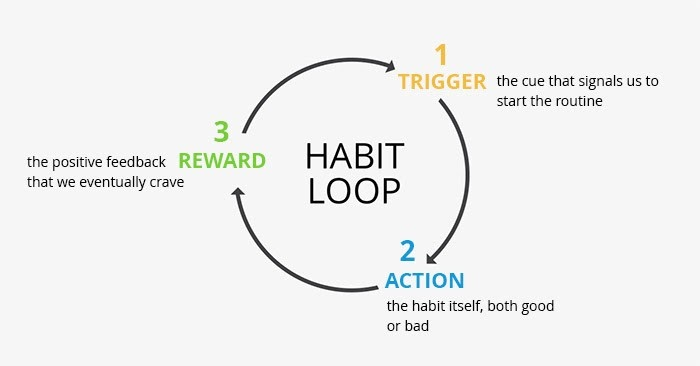
The biggest reason people abandon calm-building routines is that they try to change too much at once. If you try to force yourself into 30 minutes of daily silence, an hour of journaling, and a total digital detox starting tomorrow morning, you’ll probably quit by Thursday.
Instead, use Habit Stacking. Attach your new tiny habit onto something you already do on autopilot every single day:
- Right after you turn on the coffee maker $\rightarrow$ Take 5 slow, deep breaths.
- Right after you close your work laptop for the evening $\rightarrow$ Step away and stretch for two minutes.
- Right after you plug your phone in to charge at night $\rightarrow$ Write down one thing you’re glad happened today.
By piggybacking on existing habits, you don’t need extra willpower to remember your new routine.
FAQs
Q: Do I need an app to start meditating?
A: Nope. Apps are fine if you like guided audio, but your breath and a simple timer on your phone (set to a gentle chime) are completely free and just as effective.
Q: What if I keep falling asleep when I try to sit quietly?
A: That usually just means you’re exhausted! If you keep nodding off while sitting quietly, try practicing while standing up, sitting upright in a firm kitchen chair, or taking a slow mindful walk instead.
Q: How long before I actually feel less stressed?
A: Most people notice a slight shift in physical tension within a week or two of daily 5-minute sessions. The biggest change is realizing you have a split-second pause between getting triggered and overreacting.
Q: Can I practice mindfulness if I have an extraordinarily busy job?
A: Absolutely. In fact, busy days are when you need it most. Using routine events—like waiting for a video call to connect or washing your hands—as physical triggers to take one deep breath is a great way to stay grounded.